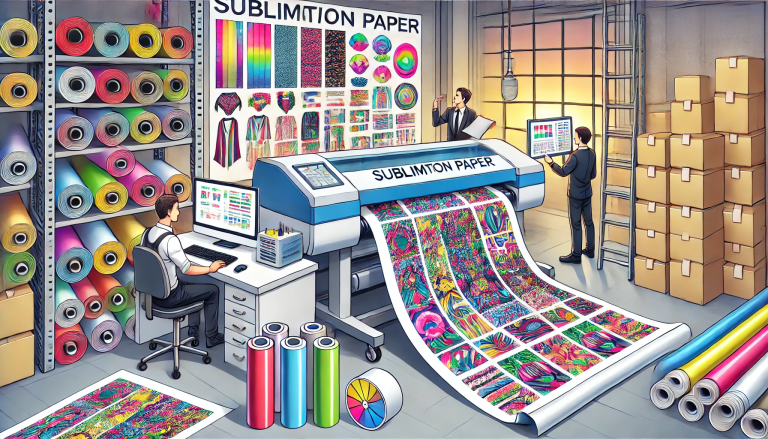
“High-Speed Sublimation Transfer Paper: Get Your Designs Printed Faster and Last Longer!” – SUBLIMATIONTRANSFERPAPER – Industrial Inkjet Sublimation Paper Wholesale, Hi-Sticky Sublimation Heat Paper Manufacturer, Made in China
In the fast-evolving digital printing industry, High-Speed Sublimation Transfer Paper and conventional transfer paper are two widely used materials, yet they differ fundamentally in design, performance, and application. While both facilitate image transfer onto substrates, their unique engineering caters to distinct production needs—from high-volume industrial runs to small-batch hobby projects. Understanding these differences is critical for printers, businesses, and crafters aiming to optimize efficiency, quality, and cost-effectiveness. This article explores five core distinctions: technical composition, transfer mechanism, speed and efficiency, substrate compatibility, and performance and practicality.
1. Technical Composition: Specialized Coatings for Speed vs. Versatility
The foundational difference lies in their material composition and coating technologies, which directly influence ink handling and transfer performance.
High-Speed Sublimation Transfer Paper is engineered with a advanced, heat-activated porous coating—typically formulated from modified polyvinyl alcohol (PVA) or nanocellulose. This coating is specifically designed to accelerate ink absorption and release, enabling rapid processing without compromising quality. Its base layer is lightweight (90–110gsm) yet durable, optimized to withstand high-speed printing and heat pressing (180–220°C) without jamming or tearing. The coating’s porosity is precisely calibrated to reduce drying time, allowing for faster production cycles—critical for industrial settings where throughput is a priority. Additionally, the paper’s surface is treated to minimize ink bleeding, ensuring sharp details even at high printing speeds.
Transfer Paper is a broad category with diverse compositions tailored to different ink types and applications:
- Heat Transfer Vinyl (HTV) Paper: Features a vinyl layer with an adhesive backing that melts onto substrates when heated.
- Inkjet/Laser Transfer Paper: Coated with resin or wax-based materials that trap pigment or dye-based inks from standard printers.
- Dark-Fabric Transfer Paper: Includes a white base layer to ensure visibility on non-white substrates.
Unlike High-Speed Sublimation Transfer Paper, conventional transfer paper coatings are not optimized for speed. They prioritize adhesion or ink retention over rapid processing, with thicker bases (120–150gsm) that may slow down printing. Most transfer papers are designed for low-to-medium speed use, making them unsuitable for high-volume production.
2. Transfer Mechanism: Chemical Bonding at Speed vs. Physical Adhesion
The transfer principle is another key distinction, with High-Speed Sublimation Transfer Paper relying on chemical bonding and conventional transfer paper using physical adhesion.
High-Speed Sublimation Transfer Paper leverages the sublimation process: when exposed to high heat and pressure, solid disperse dyes convert directly into gas. The paper’s specialized coating holds the ink temporarily, then releases it quickly to penetrate the molecular structure of polyester or polymer-coated substrates. As the substrate cools, the dye solidifies, forming a permanent chemical bond. This process is optimized for speed—high-speed paper reduces the time required for dye sublimation and diffusion, enabling faster production without sacrificing bond strength. The result is prints embedded within the substrate, offering exceptional durability and fade resistance.
Transfer Paper operates through physical means:
- HTV paper melts its vinyl layer onto the substrate’s surface, creating a tactile bond that may degrade over time with wear or washing.
- Inkjet/laser transfer paper uses heat to melt resin/wax coatings, allowing ink to adhere to the substrate’s surface—often requiring additional drying or topcoating.
- Traditional transfer paper may use pressure-sensitive adhesives, relying on heat or pressure to bond the image.
These physical bonds are slower to form compared to sublimation’s chemical reaction, and prints sit on top of the substrate, making them more prone to scratching, fading, or peeling.
3. Speed and Efficiency: High-Volume Production vs. Small-Scale Use
As its name suggests, High-Speed Sublimation Transfer Paper is designed for rapid processing, while conventional transfer paper prioritizes versatility over speed.
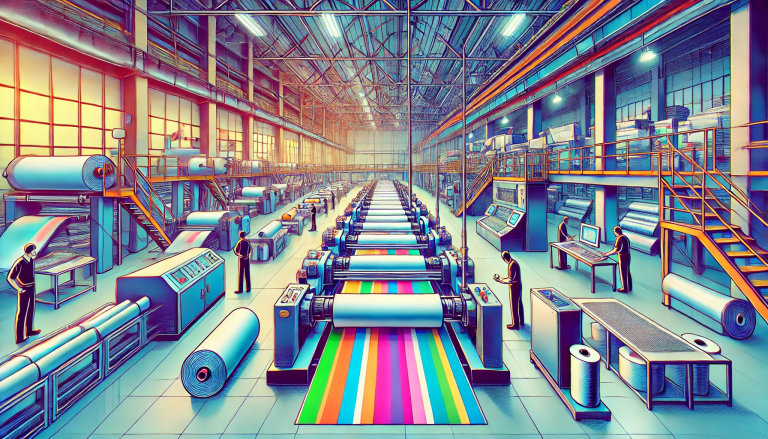
High-Speed Sublimation Transfer Paper excels in high-volume industrial settings. It works seamlessly with high-speed sublimation printers (capable of 30–100 meters per minute) and heat presses, reducing production time per unit. Its fast-drying coating eliminates waiting periods between printing and pressing, and its resistance to jamming ensures uninterrupted runs. This efficiency makes it ideal for businesses producing large quantities of polyester apparel, promotional products, or signage—where meeting tight deadlines and scaling output are critical.
Transfer Paper is optimized for low-to-medium speed use. Standard inkjet/laser printers compatible with transfer paper typically operate at 5–15 pages per minute, and the transfer process often requires additional steps (e.g., cutting, peeling, or topcoating). While some industrial-grade transfer papers exist, most are designed for hobbyists or small-batch projects. The slower workflow is acceptable for one-off designs or custom items but impractical for high-volume production.
4. Substrate Compatibility: Polyester-Centric vs. Broad Versatility
Substrate compatibility differs significantly, driven by each paper’s transfer mechanism and design.
High-Speed Sublimation Transfer Paper is specialized for polyester or polymer-coated substrates. Polyester’s molecular structure enables rapid dye penetration and bonding, while uncoated natural fibers (e.g., cotton) will not retain sublimation dyes—resulting in faint, washable prints. Common applications include polyester apparel (sports jerseys, hoodies), polymer-coated ceramics (mugs, tiles), metal (water bottles, signs), and synthetic fabrics (flags, banners). The paper’s high-speed design is particularly valuable for large-format substrates, where seamless, fast transfers are essential.
Transfer Paper offers broader compatibility, depending on the type:
- HTV paper works with cotton, polyester blends, leather, wood, and smooth metals.
- Inkjet/laser transfer paper is suitable for cotton, linen, canvas, and some plastics.
- Dark-fabric transfer paper addresses sublimation’s limitation with a white base layer, enabling prints on dark non-polyester substrates.
This versatility makes transfer paper ideal for substrates where sublimation is impractical, such as 100% cotton t-shirts, wooden crafts, or leather accessories—though at the cost of slower processing.
5. Performance and Practicality: Durability vs. Accessibility
Print quality, durability, and cost further distinguish the two papers, making each suitable for specific use cases.
High-Speed Sublimation Transfer Paper delivers high-resolution prints with vibrant colors, sharp details, and consistent tone reproduction. Its chemical bonding ensures resistance to fading, washing, and outdoor exposure—critical for commercial products. The prints are soft to the touch, with no bulky surface layer, enhancing user comfort. While the upfront cost is higher (due to specialized coatings and bulk packaging), it becomes cost-effective for high-volume production, reducing waste and labor costs. It requires compatible equipment: high-speed sublimation printers, sublimation inks, and industrial heat presses.
Transfer Paper offers variable performance: modern variants provide improved color vibrancy, but cannot match sublimation’s durability. HTV prints may crack or peel after multiple washes, and inkjet/laser transfers can fade in sunlight. However, transfer paper is more accessible—lower upfront costs for paper and equipment (standard printers work with most types), and easier use for beginners (some variants work with household irons). It is cost-effective for small-batch projects but less so for large runs due to higher waste rates and shorter print longevity.
Conclusion
High-Speed Sublimation Transfer Paper and conventional transfer paper are distinct tools, each optimized for specific printing needs. High-Speed Sublimation Transfer Paper is the choice for industrial-scale, high-volume production of polyester-based products, offering rapid processing, durable chemical-bonded prints, and consistent quality. Conventional transfer paper provides versatility for non-polyester substrates and small-scale projects, with lower upfront costs but slower workflow and shorter print longevity.
By understanding these differences in composition, transfer mechanism, speed, compatibility, and practicality, printers and businesses can select the right material to meet their goals. Whether scaling production for commercial apparel or creating custom crafts, choosing the correct paper ensures efficiency, quality, and customer satisfaction in the competitive digital printing landscape.