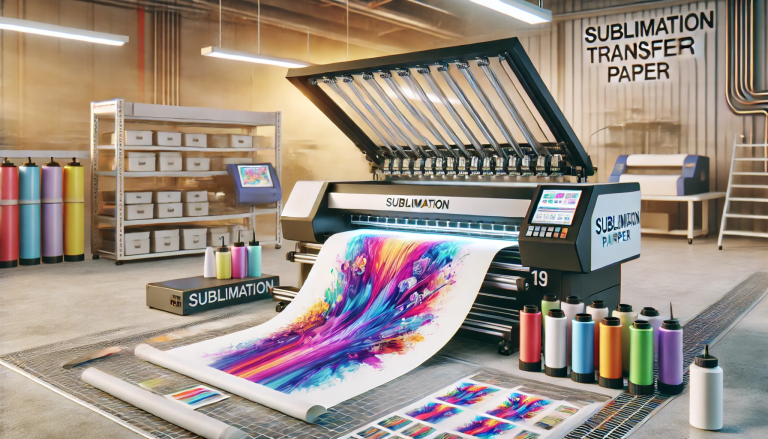
“Discover the Difference: Vinyl Sublimation Paper Roll vs Transfer Paper!” – SUBLIMATIONTRANSFERPAPER –A3 Sublimation Paper Factory, A3+ Vinyl Sublimation Paper Manufacturer, Made in China
Vinyl Sublimation Paper Roll and transfer paper are both widely used in custom printing, but they differ significantly in composition, working principles, and applications. Understanding these differences is crucial for choosing the right material for your printing projects. Below is a detailed breakdown of their key distinctions, covering core attributes, printing processes, compatibility, and performance.
1. Core Composition & Structural Differences
Vinyl Sublimation Paper Roll features a hybrid structure: a vinyl-based carrier layer combined with a sublimation-friendly coating. The vinyl carrier provides flexibility and adhesive properties, while the coating is designed to absorb and temporarily hold sublimation ink. This roll format is optimized for continuous, high-volume printing.
In contrast, standard transfer paper (including inkjet and laser transfer paper) is typically made of cellulose or coated paper without a vinyl layer. Its core function is to act as a temporary carrier for inkjet or laser ink, relying on a heat-activated adhesive (in some variants) to bond the ink to the substrate during transfer. It is available in both sheet and roll formats but lacks the vinyl backing’s structural rigidity and adhesion.
2. Working Principles: Sublimation vs. Surface Bonding
The fundamental difference lies in how the design bonds to the substrate. Vinyl Sublimation Paper Roll relies on the sublimation process: when exposed to high heat (180–230°C) and pressure, the sublimation ink turns into a gas, penetrating the surface of polyester or polymer-coated substrates and bonding molecularly. The vinyl carrier ensures alignment during pressing and is peeled off after cooling, leaving the ink integrated into the substrate.
Transfer paper uses surface bonding: the ink (inkjet or laser) is printed onto the paper, then transferred to the substrate via heat and pressure. The ink forms a thin layer on top of the substrate, held in place by either the paper’s adhesive coating or the ink’s inherent bonding properties. Unlike sublimation, the design does not penetrate the substrate and remains a surface layer.
3. Ink & Printer Compatibility
Vinyl Sublimation Paper Roll is exclusively compatible with sublimation printers and sublimation ink (disperse dyes). Standard inkjet or laser inks cannot sublimate, so they will not bond effectively with the paper or transfer to the substrate. Sublimation printers (e.g., Epson, Ricoh) with Micro Piezo printheads are ideal for this paper roll.
Transfer paper is divided into inkjet and laser variants, each compatible with their respective printer types and inks. Inkjet transfer paper works with water-based dye or pigment inks, while laser transfer paper is designed for toner-based laser printers. It is not compatible with sublimation ink, as the ink’s sublimation properties are incompatible with the paper’s coating.
4. Substrate Suitability
Vinyl Sublimation Paper Roll is limited to polyester or polymer-coated substrates (e.g., polyester fabrics, coated mugs, metal panels, ceramic tiles). The sublimation ink requires polymer molecules to bond with, so it cannot be used on natural fibers like cotton or uncoated materials.
Transfer paper has broader substrate compatibility, including cotton, cotton-poly blends, linen, and even some non-textile materials (e.g., wood, leather) with the right adhesive coating. This versatility makes it a popular choice for printing on natural fiber apparel, which is not feasible with vinyl sublimation paper roll.
5. Performance & Durability
Designs created with Vinyl Sublimation Paper Roll offer exceptional durability: they are fade-resistant, wash-resistant (up to 50+ washes for textiles), and do not peel or crack, as the ink is integrated into the substrate. The finish is seamless and soft to the touch, with no tactile layer.
Transfer paper designs are less durable in comparison. The surface layer of ink is prone to fading, peeling, or cracking over time, especially with frequent washing or wear. The finish may also feel slightly rigid or textured, depending on the ink and paper type.
6. Conclusion: Choosing the Right Material
In summary, Vinyl Sublimation Paper Roll and transfer paper differ in composition, working principles, compatibility, and performance. Choose Vinyl Sublimation Paper Roll for durable, seamless designs on polyester/polymer-coated substrates in high-volume projects. Opt for transfer paper if you need versatility across natural fibers and various substrates, even if durability is slightly compromised. Understanding your project’s substrate, desired durability, and printer type will help you make the optimal choice.