“Sublimation Paper for Lasting Color, Transfer Paper for Quick Results!” – SUBLIMATIONTRANSFERPAPER – Sublimation Heat Paper Roll Factory, Hi-Sticky Vinyl Sublimation Paper Manufacturer, Made in China
In the field of digital printing, 24-inch sublimation paper and transfer paper are two commonly used media, but they differ significantly in material properties, working principles, application scenarios, and printing effects. Understanding these differences is crucial for selecting the appropriate printing materials to meet specific production needs. This article will elaborate on the core distinctions between the two from multiple perspectives.
1. Core Definition and Working Principles
1.1 24-inch Sublimation Paper
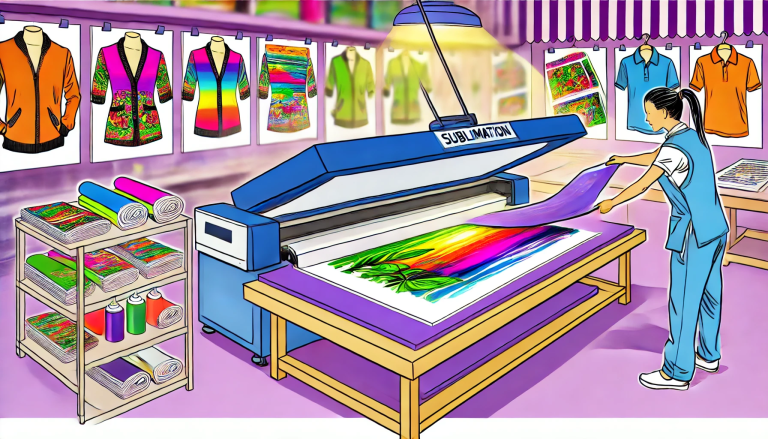
Sublimation paper is a specialized printing medium designed for sublimation transfer printing. Its core working principle relies on the sublimation phenomenon of disperse dyes. When printing, sublimation inks are first printed on the 24-inch sublimation paper. Then, under the combined action of high temperature (usually 180-200℃) and pressure, the disperse dyes on the paper undergo a phase change—directly converting from a solid state to a gaseous state. These gaseous dyes penetrate the surface of the substrate (such as polyester fabrics) and solidify inside the fibers when cooled, thereby achieving permanent color fixation.
The 24-inch specification refers to the width of the paper, which is widely used in small to medium-sized printing tasks, such as customized sportswear, promotional flags, and personalized polyester accessories.
1.2 Transfer Paper
Transfer paper is a more generalized term that encompasses a variety of papers used for transfer printing, including heat transfer paper (for inkjet and laser printers), vinyl transfer paper, and more. Its working principle is mostly based onadhesive bonding rather than sublimation. Taking the most common inkjet heat transfer paper as an example, the process involves printing patterns on the transfer paper with water-based or solvent-based inks. Then, under the action of heat and pressure, the adhesive layer on the transfer paper melts, adhering the printed pattern to the surface of the substrate. After cooling, the paper base is peeled off, leaving the pattern on the substrate.
Unlike sublimation paper, transfer paper does not require the dye to penetrate the substrate; instead, the pattern is attached to the surface of the material.
2. Material Properties and Composition
2.1 24-inch Sublimation Paper
Sublimation paper is typically made of high-quality wood pulp or mixed pulp, with a special coating on the surface. This coating has two key functions: one is to absorb and hold sublimation inks evenly, ensuring clear pattern reproduction; the other is to facilitate the rapid sublimation of dyes at high temperatures without leaving residue on the substrate. The paper has good heat resistance and tensile strength to withstand the high-temperature and high-pressure environment during the transfer process. Additionally, 24-inch sublimation paper usually has a certain degree of water absorption and drying speed to match the printing speed of sublimation printers.
2.2 Transfer Paper
The material composition of transfer paper varies greatly depending on its type. Inkjet heat transfer paper, for instance, is often composed of a paper base and a polymer adhesive layer. The paper base needs to have good ink absorption to adapt to water-based inks, while the adhesive layer (such as EVA or PU) must have excellent heat-melting and bonding properties. Laser transfer paper, on the other hand, is designed to withstand the high temperature of laser printers and has a different coating formula.
Compared with sublimation paper, transfer paper (especially heat transfer paper) is usually thicker due to the addition of the adhesive layer, and its surface is relatively smooth to ensure the flatness of the printed pattern.
3. Applicable Substrates
3.1 24-inch Sublimation Paper
The application of sublimation paper is highly dependent on the substrate material. It can only achieve ideal transfer effects on substrates with high polyester content (preferably 100% polyester) or materials coated with a sublimation-receptive layer. This is because disperse dyes can only dissolve and penetrate in polyester fibers at high temperatures. Common applicable substrates include polyester fabrics, polyester-cotton blended fabrics (with a polyester content of more than 60%), sublimation-coated ceramics (such as mugs), sublimation-coated metals (such as aluminum plates), and sublimation-coated plastics.
It should be noted that sublimation paper is not suitable for pure cotton, linen, or other natural fibers, as the dyes cannot penetrate these fibers and will easily fade or peel off.
3.2 Transfer Paper
Transfer paper has a much wider range of applicable substrates, which is one of its biggest advantages. Different types of transfer paper can be used for different materials: inkjet heat transfer paper is suitable for cotton, linen, polyester, blended fabrics, and even some hard materials such as wood and leather; vinyl transfer paper is mainly used for textiles, plastic products, metal signs, and glass; laser transfer paper is applicable to various fabrics and hard substrates.
Unlike sublimation paper, transfer paper does not require the substrate to have specific chemical properties, as the pattern is attached to the surface through an adhesive.
4. Printing Effects and Durability
4.1 24-inch Sublimation Paper
The printing effect of sublimation paper is characterized by bright colors, high saturation, and good color reproduction. Since the dye penetrates the interior of the substrate fibers, the pattern has a soft hand feel, which is consistent with the texture of the substrate itself and does not have a sticky or stiff feeling. In terms of durability, sublimation-printed patterns have excellent washability and light resistance. For polyester fabrics, the patterns will not fade, crack, or peel off even after repeated washing (meeting the national standard of more than 50 washes), and they can maintain bright colors for a long time under sunlight.
4.2 Transfer Paper
The printing effect of transfer paper varies by type. Inkjet heat transfer paper can print patterns with high definition, but the color saturation is usually lower than that of sublimation printing. The pattern has a certain thickness on the surface of the substrate, so the hand feel is relatively stiff, especially for dark-colored transfer paper, which may have a more obvious sticky feeling. The durability of transfer paper-printed patterns is relatively poor. After multiple washes, the adhesive layer may age, leading to pattern fading, cracking, or peeling off. Additionally, the pattern is prone to wear and tear due to being on the surface of the substrate.
5. Cost and Application Scenarios
5.1 24-inch Sublimation Paper
The cost of sublimation paper and matching sublimation inks is relatively high. However, due to its excellent printing effect and durability, it is widely used in high-end customized products, such as professional sportswear, high-quality promotional textiles, personalized gifts (such as sublimation mugs and photo panels), and industrial batch production of polyester products. The 24-inch specification is particularly suitable for small-batch customization and sample production, balancing production efficiency and cost.
5.2 Transfer Paper
Transfer paper and its matching inks (such as water-based inks) have a lower cost, making them suitable for low-cost, large-batch printing tasks or temporary promotional products. Common application scenarios include small-batch customized T-shirts, event souvenirs, temporary signs, and DIY handmade products. Due to its wide applicability to substrates, it is also often used in scenarios where multiple types of materials need to be printed.
Conclusion
In summary, 24-inch sublimation paper and transfer paper differ fundamentally in working principles, material properties, applicable substrates, printing effects, durability, and cost. Sublimation paper is suitable for high-quality, durable printing on polyester or sublimation-coated substrates, while transfer paper is more suitable for low-cost, wide-ranging substrate printing with relatively general durability. When selecting between the two, it is necessary to comprehensively consider factors such as the type of substrate, printing quality requirements, durability needs, and budget to ensure the best printing effect and economic benefit.